Small Business Funding Options Compare Government Grants

Small Business Funding Options Compare Government Grants

Small Business must pivot to navigate a tight economy and vanishing government grants. 

Access to capital isn’t just important, its a crucial lifeline to surviving. Government grants support comes and goes, plus the ATO stepping up pressure on tax debts, small businesses are caught between tighter margins and fewer support options. For many business owners, the constant challenge is ‘how’ do your support your growth?

This article explores the recent changes affecting small business funding, outlines viable alternatives in the private market, and provides a comparable guide to balancing grants with strategic capital to grow.

If government funding dries up what’s your next move?

small business funding

Small Business Funding Options

While grants are often tied to outcomes and reporting, alternative finance offers flexibility, speed, and strategic use cases. Australian Alternative lending market is set for huge growth, as more business owner turn to non-bank solutions.

Alternative lending adoption is expected to grow steadily over the forecast period, recording a CAGR of 17.4% during 2024-2028. The alternative lending market in Australia is set to increase from US$4.68 billion in 2023 to reach US$11.26 billion by 2028. (source ResearchAndMarkets.com)

In 2023 there were 2.5 million SMEs in Australia, with 406,000 new businesses launched.

In 2024 the top 3 growing sectors are Aged & Disability care, Cleaning & gardening maintenance and post Construction services.

In 2025 the high demand sectors were; Health Care / Aged Care, then all technology services such as cybersecurity, cloud computing & artificial intelligence.

Small businesses that are new or less than 3 years of trading, reflect a dynamic gap away from traditional banking requirements for approval. Government Grants and Private Capital are better positioned to offer small business funding options across all industries.

Access to funding is the most crucial factor, considering the survival rate of new businesses varies significantly between industries.According to (source:ABS Data cube as of 2024), 62.6% of agriculture, forestry and fishing businesses survived beyond three years of operating (among businesses started in the 2020/21 financial year). Compared with 38.8% of transport, postal and warehousing businesses survived over the same time frame. The overall survival rate across all industries was 50.1%.

small business grants

Self employed (62.5%) 1–4 employees (26.0%) 5–19 employees (8.7%) 20–199 employees (2.6%) 200+ employees (0.2%)

Australian Small Business and Family Enterprise Ombudsman

Small businesses have faced challenges, with a decline in economic performance scores in May 2024, and a decrease in businesses recruiting new staff. 

Australian Association of Convenience Stores

Small Business Grants Disappearing 

In June 2025, the NSW Government confirmed the closure of the Business Connect Program, a long-standing support initiative that offered one-on-one advice and mentoring to SMEs. Its removal leaves thousands of businesses particularly regional operators and first-time founders with one less avenue for expert guidance and development funding.

NSW is not alone. Across Australia, several state-based initiatives are under review or quietly being scaled back. While federal programs like the Export Market Development Grant (EMDG) remain in place, they often come with stringent eligibility criteria and long reimbursement cycles.

In a climate of rising operating costs and global trade instability, timing is everything. A funding delay of three to six months can be the difference between survival and closure

Government Small Business Support Available

Despite the cuts, there are still valuable funding programs available, however companies should act fast and prepare thoroughly. Here’s a snapshot is available:

Program
Provider
Purpose
Structure
EMDG (Export Market Development Grant)
Austrade
Reimburse up to 50% of export marketing spend
Matching grant, capped per tier, paid in arrears
Export Finance Australia (EFA)
Federal Gov’t
Working capital, supplier finance, overseas buyer finance
Loans and bonds for export-focused SMEs
VIC Business Growth Fund
Victorian Gov’t + Private Banks
Equity investment for SME expansion
Strategic minority stake
Ignite Ideas Fund (QLD)
QLD Gov’t
Support for innovative QLD-based businesses
Competitive grant – up to $200K
Regional Investment NSW
NSW Gov’t
Attract private investment into key industries
Project-based funding
NT Business Innovation Program
NT Gov’t
Supports early-stage business growth
Up to $30K, co-funded with mentoring

ATO Crackdown and the Real Cost of Tax Debt

From 1 July 2025, General Interest Charges (GIC) imposed by the ATO are no longer tax-deductible. At 11.17% per annum (Q3 2025), this is higher than many forms of private finance and far less flexible.

The ATO is also taking a harder line on:

  • Unpaid GST or PAYG
  • Director penalty notices (DPNs)
  • Garnishee orders and business wind-ups
  • Public disclosures to credit reporting agencies

“For many SMEs, the cost of unpaid tax debt is now not just financial, it directly impacts access to future funding.”

samall business ATO crackdown-Accrutus<br />

Export Finance Australia & Austrade

If you’re planning to scale internationally or deal with overseas buyers, Export Finance Australia (EFA) offers small business funding options such as:

  • Working capital loans up to $5M
  • Bonds to support international contracts
  • Supplier/buyer credit terms
  • Government-backed flexibility

Meanwhile, Austrade supports small business funding with these services;

  • Investment attraction into key sectors
  • Export readiness and trade promotion
  • Regional development funding

These programs are highly strategic, have a longer timeframe, and require financial backing or matching capital. Small business funding with short-term business loans, undecured working capital or trade finance can fill the cash flow gap.

small business funding options

Australia’s funding landscape is evolving and small business owners should be aware private capital available to them and know where to look and how to use it.

Accrutus Capital is committed to increasing awareness of small business funding options through their articles, non-bank funding partners, government grants and small business resources. Explore alternative capital solutions here from the private sector.

At Accrutus Capital, we help small business owners like you navigate both public and private funding, structure capital the smart way, and move fast when opportunity knocks.

Call us today at 07 3184 9183 and speak to our small business funding specialist.

Alternative Funding Solutions

  1. Don’t rely on grants alone. They are helpful but slow and increasingly limited.
  2. Assess your capital stack. Combine government support with private funding to balance risk and speed.
  3. Monitor ATO obligations. The cost of tax debt is now too high to ignore. Payout or finance the ATO.
  4. Be lender ready. Keep financials updated. Prepare your 3-way cash flow forecast. Understand what private funders, or government grants look for.

With Accrutus Capital, small business owners can access;

  • Working capital facilities
  • Equipment and asset finance
  • Unsecured term loans and LOC
  • Short-term bridging capital
  • Trade and Invoice finance

These facilities are tailored to funding growth, smoothing cash flow, and taking advantage of opportunities as they arise.

DISCLAIMER

The disclaimer covers content, comments, responsibility, links, government and local laws, jurisdiction and communication methods. None of the contents on this website or blog should be construed as any kind of advice or recommendation. Nothing in it should be taken to constitute a statement that is intended to influence a person or persons in making a decision regarding any investment or financial product. This website or blog does not purport to be complete, accurate or contain all information which its users may require to make an informed assessment of whether to invest in any Offer listed through Accrutus Capital Pty Ltd.

Small Business Struggling

Small Business Struggling

Small Business Struggling to navigating the financial pressures facing Australian SMEs in 2025

Australian small and medium-sized enterprises (SMEs) have shown remarkable resilience. But as we head into the second half of 2025, many of these small business are struggling with increasing pressure from rising costs, policy uncertainty, and shifting economic conditions. While some sectors remain cautiously optimistic, others are confronting a new reality: survival now demands strategic reinvention.

This blog provides insights into the current SME landscape in Australia, drawing on recent findings from the 22nd edition of ScotPac’s SME Growth Index and other credible sources. Our goal is to break down these complex challenges into easy-to-digest insights for time-poor business owners looking for practical guidance.


This can affect future deals and partnerships that might come down the line.

small business struggling

Why are small businesses struggling?

According to the SME Growth Index, the Australian SME sector is experiencing a mixed economic outlook:

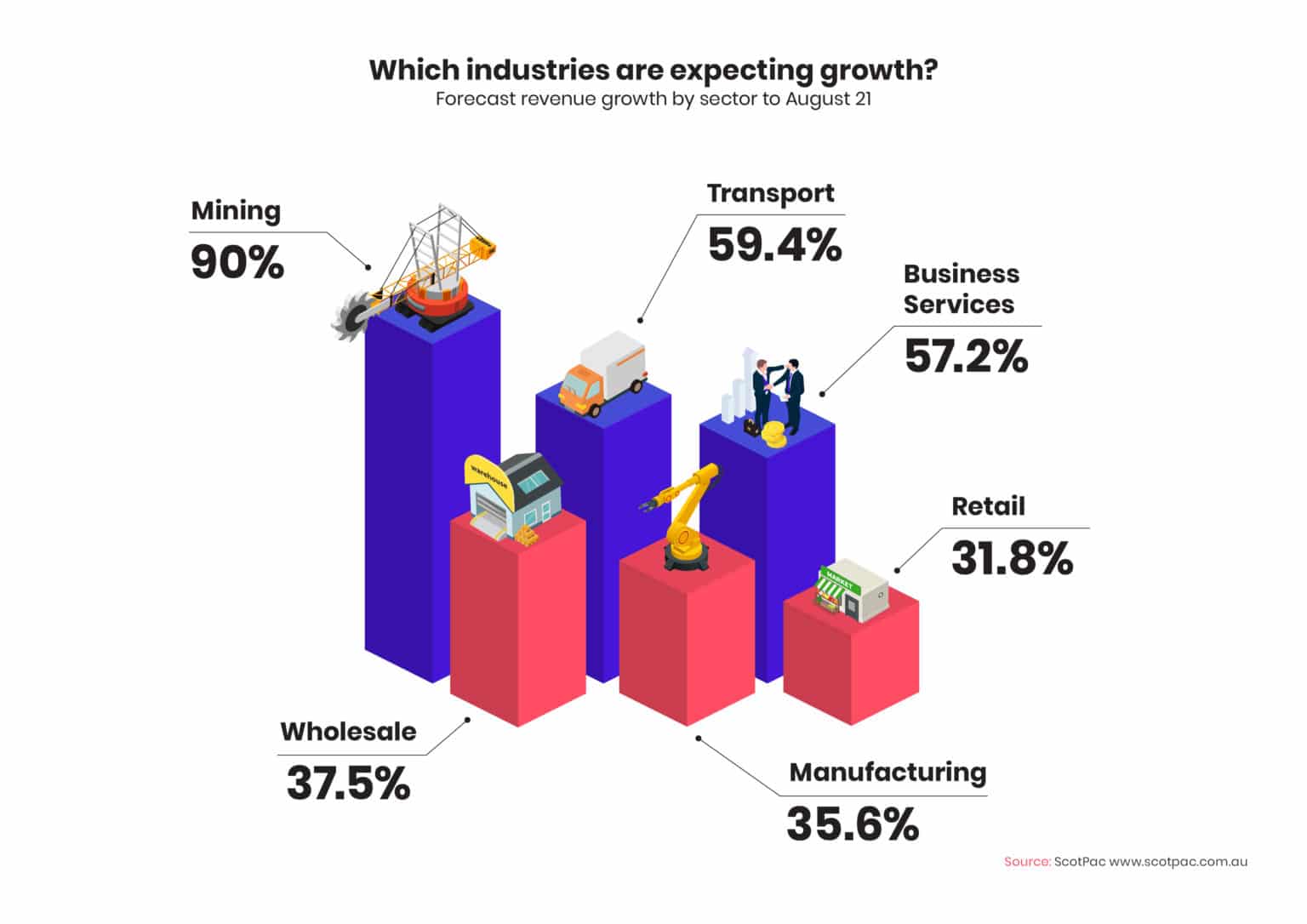
60% of SMEs expect revenue growth over the next six months, with an average forecast of 9.7%.

33% expect contraction, with an average drop of 30%, highlighting a stark divide.

SME revenue growth is projected at just 1.4%, significantly down from previous years.

This uneven outlook is worsened by inflation pressures, rising operational costs, and the lingering impact of policy uncertainty following the federal election in May.

Explore how Accrutus Capital supports SME growth.

Using contactless deliveries to make their services available.

small business trends fintech

Requiring employees to learn new skills to support the changes to the business model.

Small business struggling

Rising Employment Costs and Staffing Adjustments

A dominant concern among small business struggling is the cost of wages and superannuation:

  • 95% of SMEs report negative impacts from rising wage and super costs.
  • 45% are increasing contractor use, while 15% are outsourcing services.
  • 13% have reduced employee hours or headcount to manage cash flow.

For many SMEs, these actions are not about growth, they’re survival tactics.

The Shift to Non-Bank Finance

There’s a noticeable trend among small business struggling is being turning away from traditional bank borrowing:

  • 55% prefer non-bank lenders, up 7% from last year.
  • Only 30% plan to borrow from banks, a 29% year-on-year decline.
  • 94% would consider using their own equity for investment, an indicator of shrinking credit access and trust in banks.

As a result, alternative finance solutions are playing a vital role in bridging the funding gap.

Insolvency and Business Fragility

Payment defaults and aggressive debt collection efforts have triggered a rise in insolvency rates:

  • A 47% surge in insolvency appointments occurred in late 2024.
  • 1 in 5 SMEs say they would fail if they lost a key client.
  • Businesses report a potential 22% revenue drop from the loss of a major customer.

The risk is especially acute in retail and hospitality, where profit margins are thin and consumer spending remains uncertain.

Limited Investment in Innovation

Despite all the talk about digitisation and AI, small business are struggling to invest:

  • Only 7% are investing in AI.
  • 23% are investing in sales tools to drive immediate revenue.
  • 45% say they would invest in supply chain improvements if funding allowed.

This suggests SMEs are focused on short-term survival, not long-term innovation unless they can access capital.

What Can SMEs Do Next?

If you’re a small business struggling, the data sends a clear message: the old ways may no longer work. Here are five actionable tips:

  1. Review Funding Options: Don’t rely solely on bank loans. Consider non-bank lenders, invoice finance, or asset-backed lending.
  2. Update Cash Flow Forecasts: Include wage increases, ATO payment plans, and new supplier terms.
  3. Diversify Customer Base: Reduce reliance on a few key clients.
  4. Automate Where You Can: Use simple tools to reduce admin and free up time.
  5. Seek Professional Advice: A finance consultant can guide you through strategic funding or cost reduction opportunities.

Learn more about our cash flow solutions for SMEs

Looking to fund your cash flow?

SME Alternative Loans $5 million

  • Expansion
  • Turning away new business
  • Current funding reaches limit
  • Unable to meet commitments
  • Slow paying debtors
  • Dipping into personal funds
  • Sudden departure and payout of key business partner

DISCLAIMER

The disclaimer covers content, comments, responsibility, links, government and local laws, jurisdiction and communication methods. None of the contents on this website or blog should be construed as any kind of advice or recommendation. Nothing in it should be taken to constitute a statement that is intended to influence a person or persons in making a decision regarding any investment or financial product. This website or blog does not purport to be complete, accurate or contain all information which its users may require to make an informed assessment of whether to invest in any Offer listed through Accrutus Capital Pty Ltd.

How to Create a Cash Flow Forecast

How to Create a Cash Flow Forecast

Effective cash flow forecasting is crucial for business success, especially in today’s dynamic economic environment. This guide provides a step-by-step approach to creating a cash flow forecast, incorporating the latest trends and tools to help your business thrive.

Why Creating a Cash Flow Forecast Is Essential

Cash flow forecasting allows businesses to anticipate financial needs, plan for growth, and avoid potential cash shortages. In 2025, with economic uncertainties and evolving market conditions, having a robust cash flow forecast is more important than ever.

Create a Cash Flow Forecast

63% of Australian small businesses experienced cash flow problems over a 12-month period.

Forecasting Financial Outcomes

Estimate Sales Cash Inflows

Sources of Estimated Cash Inflows

Step-by-Step Guide to Creating a Cash Flow Forecast

1. Determine the Forecast Period – Decide on the time frame for your forecast—monthly, quarterly, or annually—based on your business needs and industry standards.

2. Estimate Cash Inflows – Consider historical data, market trends, and seasonal fluctuations to make accurate projections. Identify all expected sources of income, including new loans.

  • sales revenue
  • accounts receivables
  • investment income
  • government grants and subsidies
  • tax refunds

3. Estimate Cash Outflows – List all anticipated expenses, such as:

  • operating costs (rent, utilities, wages)
  • loan repayments
  • inventory purchases
  • marketing and advertising

Be thorough in identifying both fixed and variable costs to ensure a comprehensive forecast.

4. Calculate Net Cash Flow – Subtract total cash outflows from total cash inflows for each period to determine your net cash flow. This will help you identify periods of surplus or deficit.

5. Monitor and Adjust Regularly – Review your cash flow forecast regularly and adjust projections based on actual performance and changing circumstances. This ongoing process ensures your forecast remains accurate and relevant.

cash flow forecast

Incorporating Current Trends in Cash Flow Forecasting

Stay ahead by integrating the following trends into your cash flow forecasting process:

  • Real-Time Data Integration: Utilize accounting software that offers real-time data syncing for more accurate forecasts.
  • Scenario Planning: Develop multiple forecast scenarios (best-case, worst-case, and most likely) to prepare for various outcomes.
  • Automation and AI Tools: Leverage automation and AI-powered tools to streamline forecasting and gain predictive insights.
  • Cloud-Based Solutions: Adopt cloud-based platforms for accessible and collaborative forecasting.

A cash flow forecast helps you to predict times of cash shortage and surplus.

cash flow management
Comparing Your Cash Flow Projection to Financial Results

A cash flow forecast helps you to analyse the financial performance of your business. It provides a benchmark for you to judge whether your business is meeting financial expectations. For a cash flow forecast to be effective, you need to make regular updates to your data to ensure that your projections are accurate. If your business doesn’t perform as well as you anticipated, you need to investigate why. It could be due to a new competitor, increased pricing from suppliers or a combination of factors. Proactively monitoring your cash flow enables you to identify risks and make informed decisions about your business. For example, many businesses have hidden assets that can be leveraged to improve cash flow.

Securing Business Cash Flow

Cash flow forecasts can also help you determine when you should look to raise business finance to promote sustainable growth. If you are looking to expand your business by making a new hire or purchasing new equipment, cash flow forecasting is invaluable for estimating the financial impact on your business. This is also true for periods where you experience a cash flow gap.

This information is vital for making informed decisions around business finance, growth opportunities and tax considerations.

How Accrutus Can Support Your Cash Flow Management

At Accrutus, we specialize in assisting small businesses with financial planning and access to funding solutions. Our services include:

Accrutus Capital Supporting SMEs with Cash Flow Solutions

Our team of experts is here to help you create effective cash flow forecasts and secure the necessary funding to achieve your business goals.

By implementing these strategies and leveraging Accrutus’s services, your business can navigate financial challenges and capitalize on growth opportunities in 2025 and beyond.

Accrutus Capital is committed to increasing awareness for SMEs providing this generic business cash flow checklist. We can advise on different trade finance options, saving you time and money.

Call us today at 07 3184 9183 and speak to our trade finance specialist. Together we will devise a plan to help boost your cash flow with up to $5 million approved facility ready when you are.

Looking to fund your cash flow?

Business Cash Advance to $5 million

  • Set your own trading terms
  • Track and manage your supply chain
  • Tailored facilities from $100K to 5 million
  • Pay your international suppliers with market leading FX rates

DISCLAIMER

The disclaimer covers content, comments, responsibility, links, government and local laws, jurisdiction and communication methods. None of the contents on this website or blog should be construed as any kind of advice or recommendation. Nothing in it should be taken to constitute a statement that is intended to influence a person or persons in making a decision regarding any investment or financial product. This website or blog does not purport to be complete, accurate or contain all information which its users may require to make an informed assessment of whether to invest in any Offer listed through Accrutus Capital Pty Ltd.

10 Reasons the Bank won’t lend you money

10 Reasons the Bank won’t lend you money

Alternative SME money strategy’s is focusing on the recent ATO UPDATE MAY 2025. Businesses relying on tax deductions to partially offset late payment costs may notice additional cash flow strain.

From 1 July 2025, tax deductions for General Interest Charge (GIC) and Shortfall Interest Charge (SIC) will no longer be allowed. Businesses could previously claim these interest charges as tax deductions, but the change removes this benefit, making overdue tax liabilities more costly for SMEs in an attempt to further discourage late tax liability payments.

Do you know the 10 reasons that are standing in your way for bank finance approval?

Can your cash flow handle the seasonal highs and lows of trading?

Is your bank asking for security to approve an overdraft?

Do you carry ATO debt that is impeding your abiity to get finance?

(more…)

Stay ahead of change and keep your business growing in 2025

Stay ahead of change and keep your business growing in 2025

Business growth in today’s rapidly disruptive economic landscape is a real challenge. Australian businesses face a myriad of challenges and opportunities. With the federal election on May 3, 2025, many enterprises are adopting a “wait and see” approach, uncertain about future policies and economic directions. However, proactive planning and strategic action can position your business for sustained growth, regardless of political outcomes.

At Accrutus Capital, we believe that staying ahead of change is not just about adaptation to survive, but about seizing opportunities to thrive.

Navigating Economic Uncertainty in 2025

The Australian economy is experiencing significant shifts influenced by both domestic and global factors. Inflationary pressures persist, and interest rates remain elevated, impacting borrowing costs and consumer spending patterns. Supply chain disruptions, partly due to geopolitical tensions and realignments in global trade, have further complicated the business environment. These factors collectively contribute to a landscape where caution is understandable, but inaction can be detrimental.

The upcoming federal election adds another layer of uncertainty. Historically, businesses have tended to delay major decisions during election periods, awaiting clarity on potential policy changes. While this approach is common, it may result in missed opportunities, especially when competitors choose to act decisively.

Now is the time to strengthen your foundation, explore funding options, and position your business for long-term growth.

business growth and trade
Improve cash flow while preserving working capital

100% funding including deposit requirements

Utilise early payment discounts from suppliers

The Impact of Globalisation on Local Economies

Globalisation has brought numerous benefits, including access to broader markets and diversified supply chains. However, it has also led to unintended consequences for local economies. The outsourcing of manufacturing and services to overseas markets has contributed to job losses in various Australian industries. Rural towns, once vibrant with local industries, have particularly felt the impact, with some communities experiencing economic decline and reduced employment opportunities.

The Organisation for Economic Co-operation and Development (OECD) highlights that certain groups face a higher risk of poverty due to these shifts, and laid-off workers often encounter difficulties in securing new employment.

This underscores the need for policies and business strategies that prioritise local economic development and job creation.

Now, both consumers and governments are shifting focus: Buy local. Build local. Support local.

You don’t need to gamble your future to grow.

Here’s how to scale smartly—even in uncertain times:

1. Know Your Numbers
Understand your cash flow, liabilities, and working capital.
2. Use Your Invoices as Leverage
Don’t wait 30+ days to get paid.
Invoice finance turns your unpaid invoices into instant working capital.  Learn about Invoice Finance
3. Tap Into Trade Finance
Manage supplier payments and stay on top of operations. Discover Trade Finance Options
4. Build a Buffer
Always have a contingency fund or a pre-approved facility ready.
Need tailored finance options? Book a call with our team 07 3184 9183.

What You Can Do to Finance Your Business Growth in a Measured Way

In uncertain times, prudent financial management becomes paramount. Expanding your business requires capital, but it’s essential to approach financing strategically to avoid over-leveraging. Here are some steps to consider:

1. Assess Your Financial Health: Conduct a thorough review of your current financial position. Understand your cash flow, outstanding debts, and creditworthiness.
2. Explore Diverse Financing Options: Beyond traditional bank loans, consider alternative financing solutions such as trade finance and invoice finance. These options can provide the necessary liquidity without the stringent requirements of conventional loans.
3. Leverage Assets: Utilise existing assets, such as unpaid invoices, to access immediate funds. Invoice finance allows businesses to unlock up to 95% of the value of outstanding invoices, enhancing cash flow.
4. Plan for Contingencies: Develop a financial buffer to navigate potential downturns. This ensures that your business remains resilient in the face of unforeseen challenges.

At Accrutus Capital, we specialise in providing tailored financial solutions that align with your business objectives, ensuring sustainable growth without compromising financial stability.

Business Growth opportunity

Business Growth Through Local Manufacturing

Reinvesting in local manufacturing presents a compelling opportunity for Australian businesses. By bringing production closer to home, companies can reduce supply chain vulnerabilities, create local jobs, and contribute to the revitalisation of regional economies.

The manufacturing sector is poised for transformation, with trends indicating a shift towards sustainability and advanced technologies. Embracing practices such as automation, artificial intelligence, and sustainable manufacturing can enhance competitiveness and open new market opportunities.

Moreover, government initiatives aimed at supporting local industries may provide additional incentives for businesses to invest in domestic manufacturing. Staying informed about policy changes post-election will be crucial in leveraging these opportunities.

Local manufacturing is making a comeback and for good reason:
• More control over supply chains
• Faster production timelines
• Stronger support from consumers

Key growth areas in Australia:
• Advanced manufacturing
• Food & beverage production
• Sustainable textiles and materials

Top emerging industries in Australia
  • AI and automation projected $2.5B market by 2025
  • Hydro-electric power part of the energy transition
  • Sustainable agriculture ethical supply chains, ESG capital ready
  • Cybersecurity and Fintech resilient, scalable, global.

Industry Disruption – Business Growth Opportunities

Disruption always brings opportunity.

The current economic climate is characterised by both disruption and innovation. Industries such as hydro-electricity generation and beef cattle feedlots are experiencing significant growth, indicating a shift towards renewable energy and sustainable agriculture.

Additionally, the rapid advancement of technologies like artificial intelligence presents opportunities across various sectors. Australia’s AI industry, for instance, is projected to grow by 27.3% annually, reaching $2.5 billion in 2025.

Businesses that proactively embrace these trends, invest in innovation, and adapt to changing market demands will be well-positioned for future success.

While the instinct to adopt a “wait and see” approach during periods of uncertainty is understandable, proactive and strategic actions can set your business apart.By exploring measured financing options, investing in local manufacturing, and staying attuned to emerging industry trends, you can navigate the complexities of the current economic landscape and achieve sustainable growth.

At Accrutus Capital, we are committed to partnering with Australian businesses to provide the financial solutions and insights needed to thrive in a changing world.

Stay ahead of change. Grow with confidence. Partner with Accrutus Capital.

Accrutus Capital is committed to increasing awareness for SMEs providing this generic business cash flow checklist. We can advise on different trade finance options, saving you time and money.
Call us today at 07 3184 9183 and speak to our trade finance specialist. Together we will devise a plan to help boost your cash flow with up to $5 million approved facility ready when you are.

Looking to fund your business growth?

Working Capital to $5 million

  • Set your own trading terms
  • Track and manage your supply chain
  • Tailored facilities from $100K to $5 million
  • Pay your international suppliers with market leading FX rates

DISCLAIMER

The disclaimer covers content, comments, responsibility, links, government and local laws, jurisdiction and communication methods. None of the contents on this website or blog should be construed as any kind of advice or recommendation. Nothing in it should be taken to constitute a statement that is intended to influence a person or persons in making a decision regarding any investment or financial product. This website or blog does not purport to be complete, accurate or contain all information which its users may require to make an informed assessment of whether to invest in any Offer listed through Accrutus Capital Pty Ltd.

Seek Expert Advice to manage working capital finance- SME’s advised

Seek Expert Advice to manage working capital finance- SME’s advised

Manage Working Capital – SME’s Seek Expert help

Only 25% of SME businesses use their existing advisors such as accountants and advisers to plan their future working capital finance strategies. And those businesses that do are reaping rewards through better understanding their cash flow forecasts, their existing customers whilst arranging smarter tax and alternative finance options.

Here we explain how your business could benefit from bringing a fresh pair of eyes to the table. Seek Expert Advice to manage working capital – SMEs advised.

undertake cash flow forecasts

focus on existing customers

make arrangements with ATO

SME Growth Index

Small Businesses should explore strategic advice to manage working capital according to a leading national survey of small businesses.

The *SME Growth Index is Australia’s longest-running in-depth research on small business growth prospects.

    • undertaking cash flow forecasts (the key strategy nominated by 28% of all SMEs – but around half of larger SMEs with $5-20m revenues)
    • focusing on existing customers (27.5%) or new customers (22%) to grow revenue
    • making arrangements with the ATO (17%)
    • using invoice finance to smooth out cash flow peaks and troughs (16%)
    • increasing their overdraft (12%)

How can Invoice Finance help your Cashflow

One in six businesses were looking to Invoice Finance to manage their cash flow using financial solutions such as invoice finance, trade finance and asset finance during the pandemic recovery.

John Sutton, CEO at Scotpac commented, “We would like to see more small businesses undertake cash flow forecasts because our research found that only a quarter of SMEs do so – this is fundamental to success, and this is something accountants and brokers can be reinforcing to their clients.”

He said the fact that so many businesses are looking to restructure and are looking for ways to manage their working capital provides a perfect opportunity for accountants and brokers to initiate discussions with their SME clients.

“Australia’s small business sector relies heavily on brokers and accountants, who understand the importance of cash flow and have a good understanding of strategies and solutions to enable business success.”

“It’s the perfect time for accountants and brokers to ask their small business clients what changes they are looking to make, whether they have a clear view of how much working capital this will require, and if there are shortfalls, help them find new ways to fund the business.”

*SME Growth Index survey of small business.

International Trade Finance

*SME Growth Index: Twice a year since 2014 market analysts East & Partners conduct this research, Australia’s longest-running in-depth research on small business growth prospects.

*SME Growth Index. A representative national sample of 1253 $1-20m revenue businesses were surveyed and interviewed.

The Accrutus Cash Flow Solution

Here at Accrutus Capital, we have been offering trade and invoice finance to our clients for some time now.  It’s been incredibly rewarding to see how this alternative method has been so valuable for companies to manage working capital when faced with cash flow constraints.

Working with us, you won’t get the same apathy that you might experience from a bank or another financial provider.  Because our interests are tied to yours, we want to do everything we can to help you grow your operations.  

We focus on providing the most flexibility funding options that leverage your assets. We also don’t require any security for this type of financing.  The trade invoices themselves serve as the collateral.  You simply won’t find an easier and more convenient way to solve your cash flow problems.

Accrutus Capital offers our clients a range of flexible finance solutions to help manage working capital as the company grows. Speak to us today to explore your funding options.

Call us today 07 3184 9183 and speak with our working capital loan specialist. Together we will devise a plan to help boost your cash flow with up to $5-20 million approved facility ready when you are.

Explore ways to manage working capital

Alternative Finance to $5 million

  • Trade with flexibility, ease up capital
  • Track and manage your supply chain
  • Tailored finance structures from $100K to $5 million.
  • Leverage your assets for strategic

DISCLAIMER

The disclaimer covers content, comments, responsibility, links, government and local laws, jurisdiction and communication methods. None of the contents on this website or blog should be construed as any kind of advice or recommendation. Nothing in it should be taken to constitute a statement that is intended to influence a person or persons in making a decision regarding any investment or financial product. This website or blog does not purport to be complete, accurate or contain all information which its users may require to make an informed assessment of whether to invest in any Offer listed through Accrutus Capital Pty Ltd.

boost business cash-flow

Reduce your Tax Bill Australia

New Measures to Reduce your Tax Bill.

Most people’s idea of tax planning is what Sam Ayoubi, director tax services at KPMG, calls symptom relief, problem solving or putting out fires. But as we move into a new financial year, it’s vital to ensure you are making the most of some new incentives now available.

One of these is temporary full expensing. Announced by the government in its October 2020 budget, this allows businesses with a turnover of less than $5 billion to deduct the business portion of the cost of eligible new depreciating assets immediately.

For more on how to reduce your tax bill click here. New measures to reduce your tax bill.


The Complete Guide to Buying a Business in Australia

The Complete Guide to Buying a Business in Australia

Buying an existing business is an attractive option for those looking to enter a new industry or expand their current operations. Compared to launching a startup, acquiring an established business provides immediate access to customers, revenue, infrastructure, and an operational framework. However, this process requires careful planning, financial evaluation, and strategic decision-making to ensure long-term success.
Research published in Industrial and Corporate Change indicates that business acquisitions tend to have higher survival rates than new ventures. This advantage stems from the existing business’s structure, including its brand recognition, trained workforce, and established supply chain. However, prospective buyers must also be aware of any underlying challenges, such as debt, declining revenue, or legal disputes.
This professional and educational guide to buying a business in Australia covers 8 key tips for success such as industry research, valuation methods, acquisition finance, and negotiation strategies. Understanding these elements will help you make an informed decision and secure the right funding to facilitate a seamless transition.

Leverage finance options such as asset financing can assist in funding the purchase and ensuring business continuity post-acquisition.

Trade finance

Compare the sale price of similar businesses

Calculate the net value of assets minus liabilities

Estimate future earnings and discounts them to present value

Guide to Buying a Business – 8 Tips for Success

Selecting the right business requires a thorough assessment of personal expertise, industry trends, and market demand. Ideally, you should invest in a business that aligns with your skills, experience, and passion. A deep understanding of the industry ensures that you can effectively manage the business and overcome potential challenges.
While prior experience in an industry is beneficial, it is not always a prerequisite for success. For instance, a hospitality professional could transition into wholesale distribution with the right operational and logistical support. However, acquiring industry knowledge through research, mentorship, or temporary employment in the sector can significantly improve the likelihood of success.

1. Understand the Industry

Comprehensive industry research is essential before committing to a business acquisition. This involves analysing market conditions, consumer demand, competition, and potential risks. Study successful businesses within the industry to identify best practices and strategies that drive profitability.
Additionally, evaluating global trends can provide insight into potential market disruptions. For example, emerging technologies or international competitors could influence domestic market conditions. Understanding these external factors will help you make informed decisions about long-term business viability and growth opportunities.

Guide to bying a Business

2. Business Acquisition

Understanding why a business owner is selling is crucial in assessing the viability of the acquisition. Some common reasons for selling include retirement, relocation, or new business ventures. These are generally favourable situations for buyers, as they indicate that the business is not in financial distress.
Conversely, if a business is being sold due to mounting debt or operational struggles, prospective buyers must carefully evaluate its financial health. According to the Australian Small Business and Family Enterprise Ombudsman, a significant percentage of small business owners are nearing retirement, creating an opportunity for buyers to acquire well-established businesses with stable revenue streams.

3. How to Assess an Existing Business

Once an agreement in principle is reached, the due diligence process begins. This stage involves reviewing the business’s financial records, legal status, customer base, assets, and employee structure. Engaging financial and legal experts will provide a comprehensive evaluation and uncover any potential risks.
An important guide to buying a business cover the Financial Assessment;
Balance Sheet: Provides an overview of the business’s assets, liabilities, and equity.
Profit and Loss Statement: Shows revenue, expenses, and profitability over time.
Cash Flow Statement: Details how money flows in and out of the business.
A professional financial analysis ensures that there are no hidden liabilities or irregularities that could affect the acquisition

4. Legal Review

A legal assessment examines regulatory compliance, existing contracts, and potential liabilities. This includes reviewing partnerships, supplier agreements, and any ongoing litigation. Ensuring all legal matters are transparent is critical to avoiding post-acquisition disputes.

Customer Analysis

Understanding the customer base is vital in assessing future revenue potential. Identify key customers, their contribution to revenue, and their level of loyalty to the business. A business overly reliant on a few major clients may present a financial risk if those clients choose to disengage post-sale.

Asset Evaluation

Assets are a key determinant of business value. These include equipment, real estate, intellectual property, and technology infrastructure. The inclusion of all necessary assets in the sale should be clearly defined in the agreement.

Employee Retention

Retaining existing employees is crucial to maintaining business continuity. Onboarding new staff can be costly and time-consuming, so ensuring a smooth transition with current employees helps sustain operations. The average cost of hiring and training a new employee in Australia can exceed $18,000, making staff retention a financially beneficial strategy.

Engaging a professional business valuer or financial advisor ensures an accurate and fair valuation, reducing the risk of overpaying.

guide to buying a business - accrutus capital

Securing acquisition finance is a critical step in buying a business.

5. Valuing the Business

A precise valuation ensures that you are paying a fair price for the business. There are three common valuation methods:
Market-Based Valuation: Compares the sale price of similar businesses.
Asset-Based Valuation: Calculates the net value of assets minus liabilities.
Income-Based Valuation: Estimates future earnings and discounts them to present value.
Engaging a professional business valuer or financial advisor ensures an accurate and fair valuation, reducing the risk of overpaying.

7. Acquisition Finance

Securing acquisition finance is a critical step in buying a business. Various financing options are available, each suited to different circumstances:

  • Asset Finance & Invoice Finance
    These methods leverage business assets, such as equipment or accounts receivable, to secure funding.
  • Secured Loans
    A secured loan is backed by collateral, either personal or business assets, to reduce lender risk.
  • Unsecured Loans
    These loans do not require collateral but typically come with higher interest rates and stricter eligibility criteria.
    For those already running a business, leveraging existing assets can provide additional financial flexibility. Alternative lenders offer tailored funding solutions, such as leveraging outstanding invoices, inventory, or equipment to secure capital.

8. Making an Offer and Negotiating the Purchase

Before negotiating, outline the key assets included in the sale and define your budget limits. Start with a lower, justifiable offer, leaving room for negotiation. The final agreed price should reflect the business’s true value and align with its financial and operational prospects.
If negotiations reach an impasse or the asking price is unrealistic, be prepared to walk away. A successful acquisition is one that aligns with your financial and strategic goals.

Drafting the Purchase Contract

A legally binding purchase contract formalizes the sale agreement. This document should outline the assets included in the sale, any warranties provided by the seller, and contingencies for undisclosed liabilities.
Engaging legal professionals ensures that the contract is comprehensive and safeguards your interests. Additionally, consulting a business accountant will help clarify the tax implications when buying a business.

Finalizing the Business Acquisition

Once the contract is signed, ownership is officially transferred, and you become the new business owner. This marks the beginning of your transition plan, where integrating with employees, suppliers, and customers is key to maintaining stability.

Buying a business in Australia offers numerous advantages but requires thorough due diligence, proper valuation, and well-structured financing. This comprehensive guide to acquiring a business highlights the essential 8 tips to ensure a successful acquisition.
If you are considering a business acquisition and need financing, consult Accrutus Capital at +61 07 3184 9183 to explore tailored funding solutions that suit your needs.

Looking to fund your cash flow?

Acquisition Finance $5-25 million

  • private capital for structured loans
  • leveraged your existing assets
  • use debt and equity

DISCLAIMER

The disclaimer covers content, comments, responsibility, links, government and local laws, jurisdiction and communication methods. None of the contents on this website or blog should be construed as any kind of advice or recommendation. Nothing in it should be taken to constitute a statement that is intended to influence a person or persons in making a decision regarding any investment or financial product. This website or blog does not purport to be complete, accurate or contain all information which its users may require to make an informed assessment of whether to invest in any Offer listed through Accrutus Capital Pty Ltd.

Fintech Changing World of Finance

Fintech Changing World of Finance

FinTech changing world of finance from traditional banking is ripe for disruption and we’re finally starting to see that play out.  The FinTech industry has taken aim at the status quo. They are showing us that with some fresh thinking and new technology, the financial system can be significantly improved.

FinTech’s core idea is making financial services more accessible, approachable, and efficient.  We’ve seen this accelerated recently as the global pandemic has forced consumers to rethink how they engage with financial service providers. Instead of going into a branch, customers are moving to online channels, mobile apps, and other new forms of customer interaction.

For small businesses, these new forms of finance are exciting new avenues to support their growth and scale.  For those who can adapt to the new normal, they’ll find that this technology acts as a key leverage point for long-term growth.

“Australia can be a leader in digital assets. This means Australians can access new choices and lower prices. It means Australians can have more control of their financial destiny rather than being dependent on endless intermediation,” said committee chair, Senator Andrew Bragg, on occasion of the report’s unveiling in October 2021.

In this vein, let’s look at FinTech changing world of finance trends that should catch all small business owners attention.

FinTech solutions are no longer mere gimmicks.  They are becoming the most important force in the financial system as a whole.

How is FinTech Changing World of Finance

They will transform the way businesses operate as the new normal has embraced new customer and safety behaviors across all industries.

Augmented Reality

Mobile Technology

AI-infused CRM

Artificial Intelligence

5G Technology

Omnichannel Shopping

Fintech Changing Finance - Accrutus Capital
in 2021, AI (Artificial Intelligence) remains the top tech trends. To be incorporated into new and exciting processes and solutions like voice assistants and chatbots.

FinTech changing world of finance
Fintech changing world of finance by helping small businesses save time and money, through automating manual task.

In 2021-22 it is predicted that most of the company’s budget will be spent on automation of services, delivery and marketing.

FinTech alternative lenders

7 FinTech Trends that are Changing the World

1.  The Rise of Alternative Lending

In years past, small businesses were forced to beg and plead with banks to access the financing that they needed to grow.  Getting a bank loan remains a very difficult proposition for a company that cannot meet the stringent requirements set by the banks.

FinTech changing world of finance lenders have sprung up in their droves to help here, offering more flexible, efficient, and timely financing options for small businesses of all kinds.  In today’s world, you aren’t limited to just a few banks.  You actually have a wide variety of different options that you can select from – depending on your circumstances and your needs.

These could include working capital finance, trade finance, invoice finance, SME bonds, and so much more.  Each of these new product verticals offers a fresh take on fundraising in a way that works for you.

2.  Mobile Payment Options

Another area of FinTech that has boomed in popularity is the world of mobile payments.  Culturally, consumers are becoming much more comfortable with using their phone or e-wallet to make payments.  And small businesses that can enable these payment methods will benefit from this change in consumer behaviour.

The payments of the future will be vast and diverse, allowing each consumer to choose what works for them.  This only bodes well for small businesses that want to reduce as much friction as possible for their customers.

The more payment options you can offer, the more customers you’ll be able to serve.

3.  Advanced Analytics

Thanks to advancements in data science and machine learning, companies of all sizes are getting a better grasp on their data and what it can do for them.  The ability to derive key insights from customer data and link them to purchasing behaviour creates a treasure trove of information.  All of which can improve overall decision-making and transform your business for the better.

This will continue to improve over time and small businesses who get into this early will have a major advantage over those who don’t.

4.  Short-Term Business Finance

By removing a lot of the friction in the financial system, FinTech changing world of finance providers are able to offer short-term finance options that just aren’t possible with traditional providers.  Sometimes all a small business needs is a small bridging facility or working capital finance to get them through a temporary cash crunch.

FinTech allows them that opportunity without locking them into onerous contracts or long-term financing that they don’t need.  This flexibility is worth its weight in gold.

5.  Alternative Credit Models

FinTech providers have worked hard to develop products that can get around a lot of the red tape that exists in lending.  We’ve seen new credit models emerge that look at metrics and performance indicators that are specifically suited for small businesses.  These lenders understand the struggles of running a small business and have crafted solutions specifically designed for those companies.

This is a big step forward in getting small businesses the support they need to survive the early years and grow into larger companies that can make a difference in their respective industries.

6.  Crowdfunding

FinTech changing world of finance through the rise of crowdfunding is another key development and the new way to raise capital.  Whether it’s for a specific product or for an entire company’s equity, crowdfunding platforms offer an unique mechanism for fundraising.  It can be used to assess early demand and bring a large group of people along for the journey.  Instead of relying upon one key provider to fund the whole thing, the risk is widely diversified.  It allows for much more natural interaction between investors and their investees.

Small businesses can use this to their advantage to raise the funding they need while also building a community of stakeholders that care about what they’re doing.  Not to mention the vested interest they have in their success.

7.  Automation

The last trend we’ll look at here is automation.  FinTech changing world of finance enables a wide range of opportunities for small businesses to automate a number of their routines, and procedural financial tasks.  These tasks would previously have taken up a lot of time and resources.  By handing these off to intelligent systems, these businesses can deploy that energy to other higher-value tasks.

These FinTech systems can run 24/7 in the background, without any human intervention, and it opens up the doors for customers whenever they want to engage with your offering.  It also liberates your staff from tedious work and allows them to spend more time on the things that really matter.

How These Trends Can Benefit Your Small Business

FinTech changing world of finance is important to look at some of the overarching patterns that can prove very valuable for any small business.

  • Speed. Instead of waiting weeks for a bank to come back to you, you can access funding quickly and efficiently through FinTech solutions.  Every minute you save here is crucial for keeping your business ticking along and it allows you to be much more agile as an organization.  Time is money, as they say.
  • Lower Costs. Because FinTech providers aren’t saddled with the infrastructure and legacy systems of banks, they can greatly reduce the cost of funding.  As a result, you can maintain strong margins and operating leverage while still paying back your loans.  This alone can be a game-changer for your company.
  • Less Paperwork. This might sound trivial but every moment spent on administrative tasks is time that isn’t being spent on growing your business.  FinTech providers who can eliminate a lot of the paperwork allow you to efficiently access finance without any roadblocks or bottlenecks.
  • More Flexibility. FinTech offers financial services that suit your specific needs so that you’re only using what you need when you need it.  You can craft your financial future as a result and tie your lending behaviour directly to the performance of your company.  Flexibility gives you options and that’s invaluable in the early years when you’re still looking for traction and scale.

All of these pillars represent significant improvements on the current financing options available to small businesses.  By leveraging each of these benefits, you can get on the front foot when it comes to your financial situation, making it that much easier to grow and prosper. Australian FinTech’s are now internationally competitive, according to 80 per cent of respondents, up from 64 per cent in 2019.

We will embrace FinTech changing world of finance, for 2021 and beyond, because there is not turning back.

Our Role at Accrutus Capital

Here at Accrutus Capital, we’re passionate about helping small businesses access these opportunities and walking with them as they transform their organizations.  These trends are not just a 2021 fad, they are here to stay.  And we are doing all we can to create the sorts of products and services that can be the catalyst for that.

If you’re looking for alternative small business finance, working capital finance, unsecured business loans, or a range of other solutions we’re here to help.  Get in contact today and let’s work together to bring your company into this exciting new world of FinTech.

Accrutus Capital is committed to increasing the awareness of fintech changing of world finance to facilitate multiple debt and equity options. These fast non-bank solutions boost cash flow when you need it most, saving you time and money.
contact Accrutus Capital

Call us today 07 3184 9183 and speak to our alternative finance specialist. Together we will devise a plan to help boost your business growth with fast working capital finance.

Looking for Alternative Funding Solutions?

Get Fast Capital from $100K to $20 million

  • Banks won’t lend you money
  • Don’t have 3 years financials
  • Cannot provide collateral
  • No Pre-sales. Need to settle land?
  • Cash Flow is seasonal
  • Shipping delays and/ or supplier issues

DISCLAIMER

The disclaimer covers content, comments, responsibility, links, government and local laws, jurisdiction and communication methods. None of the contents on this website or blog should be construed as any kind of advice or recommendation. Nothing in it should be taken to constitute a statement that is intended to influence a person or persons in making a decision regarding any investment or financial product. This website or blog does not purport to be complete, accurate or contain all information which its users may require to make an informed assessment of whether to invest in any Offer listed through Accrutus Capital Pty Ltd.

Boost Business Cash Flow Checklist

Boost Business Cash Flow Checklist

The Business Cash Flow Checklist is a useful resource to independently evaluate the financial health of your company. There are many aspects to having a successful and profitable company. However, the single most important skill is mastering business cash flow as your company grows, because the #1 reason for business failure is insufficient cash.

If you want predictable cash flow in your business you've got to learn what to measure in order to get there. Otherwise, how will you know you have met your goals and level out the highs and lows when it comes to cash flow.

Break even points are another measurement that allows us to know when we have our bills covered monthly, importantly can you pay yourself.

Predictable business cash flow can ease a lot of stress and allow us to focus on other important operational areas. 

Is your cash flow management style chaotic?

Do you constantly seek out short-term business finance?

Is your business providing you the lifestyle you want?

Cash is King

  • Learn the small business principles of cash flow management by working through your own business cash flow checklist.
  • Review your internal sources to reduce stock levels, reduce overheads and watch out for theft and fraud.
  • Review your customer payment cycle, terms and overdue accounts and offer discounts for cash payment.
  • Develop a solid system to manage your suppliers and track the relationship.
  • Negotiate favourable payment terms such as paying by instalments or use interest free credit card cycles.
boost business cash-flow
Most importantly make sure your business operates entirely for the purpose of providing you with a profit, not just a job.

Business Cash Flow Checklist Review

If you take a truthful critical review of your business, you will recognize gaps and potential negative traps on the realistic financial health of your company. Before you start, remind yourself WHY you started this company?

  • The journey to managing business cash flow is unlikely to be a smooth one. Along the way, there will be unforeseen expenses, costs blowouts and under performance of sales departments to meet projected budgets.
  • If you are a new business without 3 years trading history, traditional banks are unlikely to lend you money. The Business Cash Flow Checklist takes a independent first step approach, ensure you consult with a professional accountant to confirm the financial health of your company.
Business cash flow checklist
As the business grows, investment into technology upgrades will be required in order to stay competitive.

Business Cash Flow for Technology and Innovation

  • This can often be a major capital expenditure and if not planned appropriately in advance, can impact your business cash flow. This off-course is highly relevant to the type of business you operate.
  • How innovative is your industry sector in embracing new technology that could easily make your product or services redundant. Investment into a professional sales and accounting platform is essential to track and report on the cost and profitability of delivering your different products and services. Alternative sources of funding provide a solution to innovative companies seeking to raise capital.

Business cash flow success is closely aligned with the growth plans of the company, to ensure there is sufficient capital to implement its strategy.

Business Cash Flow for Strategic Growth 

  • For a new company the main focus is on building a solid revenue base while building up the profit margins.
  • For an established company the focus shifts to a more tactical or strategic plan to keep momentum, or to speed up growth through acquisition or mergers.
  • This is also a dangerous time for a company if it grows too quickly, where management and current systems may not be adequate. This could have a spiralling negative effect on customer satisfaction, quality control and ultimately revenues.

Temporary cash flow boosts from the ATO will support small and medium businesses and not-for-profit organisations during the economic downturn associated with COVID-19.

How to use the Business Cash Flow Checklist

  • Identify the critical cash flow areas of the business
  • Assess the management of your debtors and creditors
  • Quickly determine your company’s liquidity to better manage cash flow
  • Review your pricing and cost of goods or services to remain competitive
  • Understand your assets, liabilities, equity, and business cash flow before borrowing money
  • Use the Business Cash Flow Checklist as your building blocks to mastering money

Download 97 Money Mastery Questions

boost business cash-flow

Business Cash Flow Checklist

    Accrutus Capital is committed to increasing awareness for SMEs providing this generic business cash flow checklist.

    We can advise on different working capital finance options, saving you time and money.

    Contact us today 07 3184 9183 and speak to your finance specialist at Accrutus Capital. We might just be able to help boost your business cash flow with up to $5 million, with no security required. Conditions apply.

    Looking to fund your cash flow?

    Fast Working Capital Loans $500K

    • Purchase more supplies
    • Start a new contract
    • Grow your team and business

    DISCLAIMER

    The disclaimer covers content, comments, responsibility, links, government and local laws, jurisdiction and communication methods. None of the contents on this website or blog should be construed as any kind of advice or recommendation. Nothing in it should be taken to constitute a statement that is intended to influence a person or persons in making a decision regarding any investment or financial product. This website or blog does not purport to be complete, accurate or contain all information which its users may require to make an informed assessment of whether to invest in any Offer listed through Accrutus Capital Pty Ltd.

    $20,000 asset tax write-off extended another $10K

    This is the secret to your small business success. Management must focus on their financials which can fall by the wayside when your consumed with the day-to-day operations. Unfortunately, losing sight of a company’s financial health, even for a brief period of time, can result in big problems. Financial problems are insidious which creep up slowly and often go unnoticed. Before the owners realizes what’s happened, a business can be drowning in debt and strapped for cash. Keep a close eye on these 5 key small business finance tips to ensure that money problems are dealt. (more…)

    5 Key Small Business trends to watch in 2018

    5 Key Small Business trends to watch in 2018

    Small business trends are well and truly into play for 2018, as we see these filter down into a number of key areas where SMEs should pay attention to. to. Australia’s economic and political environment does impact all levels of society, whether individuals, families or companies large and small. Small business trends start to have momentum when policies that are set by the current government start to take affect, and the legal framework dictates how  business owners operate. The two global superpowers of the USA and China also influence local market trends and affect consumer sentiment, employment and spending confidence. (more…)

    Cash flow Management

    Cash flow Management

    Cash flow management is essential to small business finance requirements to provide continuity of trading and that it has sufficient funds to meet daily expenses and any debt payments due. The management of working capital involves managing these 4 aspects of the company’s operations. (more…)

    Checklist: Start Business With No Money Australia (2026 Edition)

    Checklist: Start Business With No Money Australia (2026 Edition)

    Starting a business today no longer requires deep pockets it requires clarity, creativity, and smart use of available tools. In 2026, Australian entrepreneurs can build lean, digital-first ventures using cloud technology, AI, and non-bank funding options to launch faster and more sustainably.

    Below is an updated checklist to help you start your business journey even if you’re short on cash, written for the realities of Australia’s evolving business and finance landscape.

    (more…)

    Small Business Finance Tips

    Small Business Finance Tips

    This is the secret to your small business success. Management must focus on their financials which can fall by the wayside when your consumed with the day-to-day operations. Unfortunately, losing sight of a company’s financial health, even for a brief period of time, can result in big problems. Financial problems are insidious which creep up slowly and often go unnoticed. Before the owners realizes what’s happened, a business can be drowning in debt and strapped for cash. Keep a close eye on these 5 key small business finance tips to ensure that money problems are dealt. (more…)